
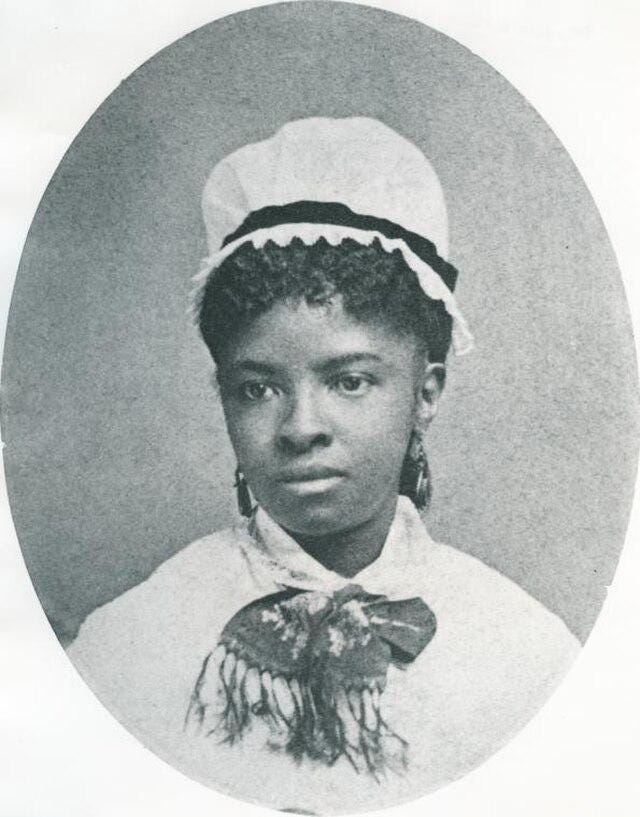
The Woman Who Broke the Ceiling: The Legacy of Mary Eliza Mahoney
When we think of nursing pioneers, names like Florence Nightingale often come to mind. But there is another name that deserves equal space in the history books: Mary Eliza Mahoney. In 1879, she became the first African American woman to earn a professional nursing license in the United States, a feat that required more than just medical skill—it required an iron will.
A 15-Year "Internship"
Born in 1845 in Dorchester, Massachusetts, Mary was the daughter of freed slaves. Her journey into nursing wasn't a sudden career choice; it was a slow, dedicated burn. At age 18, she began working at the New England Hospital for Women and Children.
However, she wasn't a nurse yet. For 15 years, she worked as a cook, a janitor, and a laundress. She watched the nurses, learned the rhythms of the hospital, and waited for her chance.
Survival of the Fittest: The 3% Graduation Rate
In 1878, at the age of 33, Mary was finally admitted into the hospital’s professional nursing program. To say the program was "rigorous" is an understatement. It was a 16-month marathon of 16-hour workdays and intense lectures.
The stakes were incredibly high:
- 42 students started the program alongside her.
- By the end, only three students graduated.
Mary was one of those three. With that diploma, she didn't just earn a title; she shattered a racial barrier that had stood since the inception of American medicine.
Navigating a Divided America
Even with her credentials, the world wasn't ready to make it easy for her. Because of the rampant "Jim Crow" era discrimination, most hospitals refused to hire Black nurses.
Rather than giving up, Mary pivoted to private duty nursing. She worked for wealthy families across the East Coast. She became so well-regarded for her professionalism and calm demeanor that she began to change the minds of her white patients and colleagues. She proved that excellence has no color, effectively "marketing" the capability of Black professionals through her own high standards.
"If I can help someone as I pass along, then my living shall not be in vain."
More Than Medicine: The Fight for Equality
Mary knew that being the "first" wasn't enough if she was also the "only." She spent the latter half of her career ensuring other Black women could follow her lead.
- The NACGN: In 1908, she co-founded the National Association of Colored Graduate Nurses. This was a direct response to the American Nurses Association (ANA) being slow to integrate.
- Women’s Suffrage: Her activism didn't stop at the hospital doors. After the 19th Amendment passed in 1920, Mary was one of the first women in Boston to register to vote, continuing her fight for equality into her 70s.
The Legacy Today
Mary Eliza Mahoney passed away in 1926, but her footprint is everywhere. The Mary Mahoney Award is still one of the highest honors in nursing today, given to those who promote integration and equal opportunity in the field.
She reminds us that sometimes, being a pioneer isn't about being the loudest person in the room—it’s about being the most persistent